Why Aluminum Casting Is Perfect for High-Volume Production Runs
Aluminum casting has actually become a leading option for high-volume production runs. Its lightweight nature and reliable mass production capacities add to decrease expenses and boosted shipping effectiveness. In addition, advanced modern technologies in aluminum casting allow for complex styles and high precision, decreasing the need for considerable machining. As producers look for ways to maximize their manufacturing procedures, comprehending the complete extent of aluminum casting's advantages comes to be vital. What various other benefits does this technique deal?
Benefits of Aluminum in Casting
Aluminum, frequently acknowledged for its light-weight residential or commercial properties, provides significant advantages in the casting process. Its low thickness not just decreases weight however additionally enhances gas performance in applications such as automotive components. The outstanding thermal and electrical conductivity of aluminum makes it perfect for different commercial applications, allowing for effective heat dissipation and boosting efficiency in electrical systems.
Additionally, aluminum exhibits excellent rust resistance because of the formation of a protective oxide layer, which expands the life-span of cast components. This resilience is particularly beneficial in rough and outside atmospheres. The alloying capabilities of aluminum likewise enhance its residential properties, allowing the creation of tailored remedies tailored to particular requirements. Furthermore, aluminum can be cast right into elaborate forms with high dimensional accuracy, reducing the requirement for extensive machining - Metal Foundry. Collectively, these features position aluminum as a recommended material in casting, specifically for high-volume production runs

Effectiveness in Manufacturing Processes
Effectiveness in manufacturing processes is necessary for making the most of the advantages of aluminum casting in high-volume manufacturing. By lowering cycle times and integrating streamlined process, suppliers can enhance efficiency and decrease downtime. This concentrate on effectiveness not just speeds up outcome but additionally adds to cost-effectiveness in manufacturing operations.
Decreased Cycle Times
Simplifying production processes significantly decreases cycle times in aluminum casting. This effectiveness originates from the fostering of sophisticated innovations and techniques that maximize each phase of manufacturing. Automated systems, such as computer-controlled machines and robotic arms, enhance precision and speed, reducing hands-on intervention. Furthermore, the usage of effective mold and mildew styles and products enables quicker air conditioning and solidification, minimizing the moment needed for every casting cycle - Aluminum Casting. The assimilation of real-time surveillance systems allows makers to promptly determine and fix problems, protecting against hold-ups. As a result, shorter cycle times result in raised throughput, allowing firms to satisfy high-volume production demands while keeping top quality requirements. Eventually, this effectiveness in production processes placements aluminum casting as a remarkable option for large-scale production
Structured Process Integration
In modern-day manufacturing, a well-integrated workflow can substantially improve productivity in aluminum casting procedures. By enhancing each stage of manufacturing-- from style and mold production to the casting procedure and ending up-- producers can minimize hold-ups and decrease prices. Carrying out advanced software program options and automated machinery promotes real-time surveillance and modifications, guaranteeing that every facet of production runs smoothly. This assimilation not only enhances communication in between divisions but also advertises partnership, leading to quicker analytical and technology. On top of that, a natural workflow enables for better resource administration and supply control, decreasing waste and raising overall effectiveness. The outcome is a more active manufacturing environment that can react to market demands quickly, making aluminum casting an optimal selection for high-volume manufacturing runs.
Cost-Effectiveness of Aluminum Casting
While various producing approaches exist, aluminum casting stands out as an economical remedy for high-volume production. This method permits efficient automation, substantially decreasing the expense per system. The first arrangement costs are frequently balanced out by the rapid production reference prices accomplished throughout the casting procedure. Aluminum's light-weight nature additionally adds to decrease delivery and handling expenses, in addition boosting its financial benefits.
In addition, the usage of aluminum casting minimizes product waste contrasted to traditional machining methods, as excess product is typically reused within the manufacturing cycle. The resilience and durability of aluminum components reduce the need for constant substitutes, equating into long-term savings for manufacturers. Additionally, the capability to create intricate components in a solitary procedure gets rid of the demand for several production phases, reducing and streamlining procedures labor expenses. On the whole, aluminum casting presents an economically practical option for organizations intending to scale their production successfully.
Style Flexibility and Intricacy
Although lots of producing procedures enforce limitations on layout, aluminum casting uses amazing adaptability that fits complex geometries. This versatility allows developers and engineers to develop elaborate forms and features that would certainly be difficult or challenging to attain through various other techniques. The liquid nature of molten aluminum enables it to load detailed mold and mildews, recording fine details and intricate structures effortlessly.
Aluminum casting supports a range of style adjustments without greatly enhancing production expenses. This is specifically advantageous for high-volume production runs, where modifications can be made to fulfill details customer requirements or layout enhancements. The ability to produce lightweight yet long lasting parts adds to total item efficiency and performance. As industries increasingly require cutting-edge layouts, the layout adaptability inherent in aluminum casting positions it as a leading choice for producers seeking to balance complexity with production effectiveness.
Environmental Benefits of Aluminum Casting
Aluminum casting presents considerable environmental benefits, particularly through its ability to reduce waste and power intake throughout manufacturing. The process utilizes recycled aluminum, which requires just 5% of the power required to create primary aluminum. This conservation of power brings about a reduced carbon impact, adding to an extra lasting manufacturing community.
In addition, aluminum casting creates less by-products and scrap compared to various other metalworking techniques, lessening landfill waste. The high recyclability of aluminum more my latest blog post improves its environmental qualifications, as it can be remelted and recycled indefinitely without derogatory top quality.
Furthermore, aluminum's lightweight nature boosts fuel performance in transport, decreasing greenhouse gas exhausts connected with logistics. As industries progressively focus on sustainability, aluminum casting attracts attention as a liable selection, straightening with worldwide initiatives to reduce ecological impact while meeting the needs of high-volume manufacturing. On the whole, aluminum casting exhibits a commitment to ecologically aware manufacturing practices.
Applications Throughout Numerous Industries
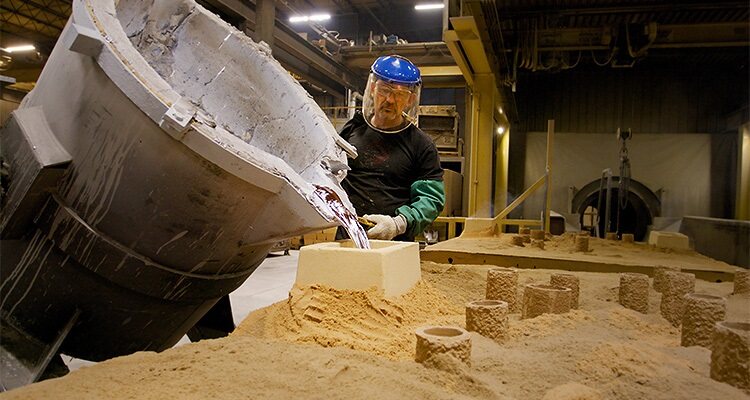
Furthermore, the consumer electronics market uses aluminum casting for units and heat sinks, guaranteeing resilience while preserving visual allure. In the building field, aluminum spreadings are made use of for building components and architectural parts, giving both functionality and layout flexibility.
Furthermore, the medical equipment industry relies upon aluminum castings for making tools that call for accuracy and hygiene. In general, aluminum casting's flexibility and efficiency make it an essential procedure across various industries, meeting the needs for high-volume manufacturing while preserving high quality and performance.
Often Asked Concerns
Exactly How Does Aluminum Casting Compare to Various Other Products?
Aluminum casting offers advantages over various other products, such as lightweight toughness, deterioration resistance, and exceptional thermal conductivity (Aluminum Foundry). These residential or commercial properties make it preferable for numerous applications, especially where sturdiness and efficiency are extremely important in manufacturing processes
What Are the Regular Lead Times for Aluminum Casting Projects?
Normal lead times for aluminum casting tasks range from 2 to 6 weeks, relying on elements such as intricacy, mold prep work, and production volume. Reliable processes can considerably minimize these times for high-demand manufacturing requirements.
Can Aluminum Casting Be Recycled After Usage?
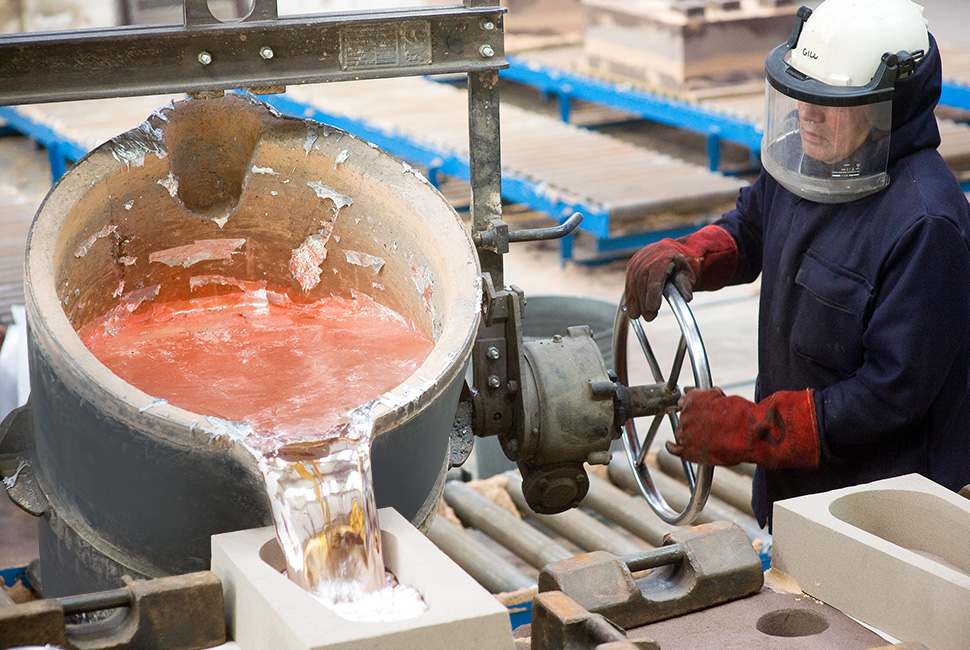
What Kinds of Problems Can Occur in Aluminum Casting?
Typical flaws in aluminum casting consist of porosity, shrinkage, misruns, and additions. These concerns can emerge from improper mold layout, insufficient pouring strategies, or inaccurate temperature control, possibly influencing the mechanical homes and total top quality of the casting.
How Is Quality Assurance Managed in Aluminum Casting?
Quality control in aluminum casting is handled with extensive click resources examinations, adherence to sector criteria, and the implementation of real-time monitoring systems. These practices guarantee consistency, minimize problems, and maintain premium manufacturing throughout the manufacturing procedure.
As suppliers look for means to optimize their production processes, understanding the complete extent of aluminum casting's benefits comes to be necessary. Efficiency in production processes is essential for taking full advantage of the benefits of aluminum casting in high-volume manufacturing. Streamlining manufacturing procedures considerably decreases cycle times in aluminum casting. The process utilizes recycled aluminum, which calls for just 5% of the energy needed to produce key aluminum. As sectors progressively prioritize sustainability, aluminum casting stands out as a responsible selection, lining up with worldwide efforts to lower environmental impact while fulfilling the demands of high-volume manufacturing.
Comments on “Metal Casting Methods That Deliver Faster Turnarounds for Prototypes”